 |
|
 |
|
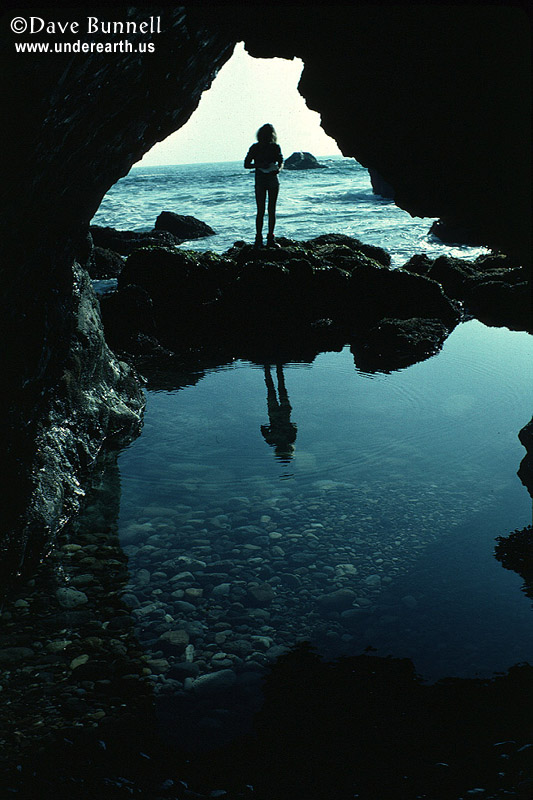
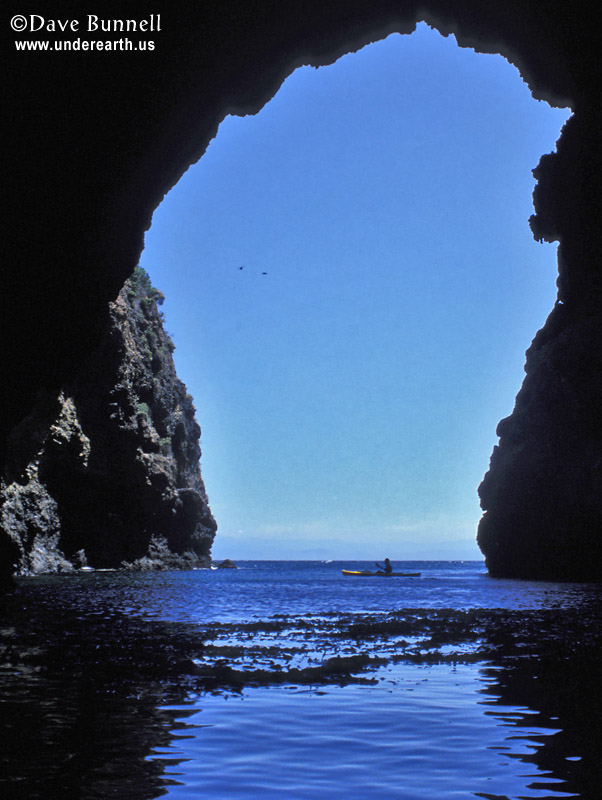
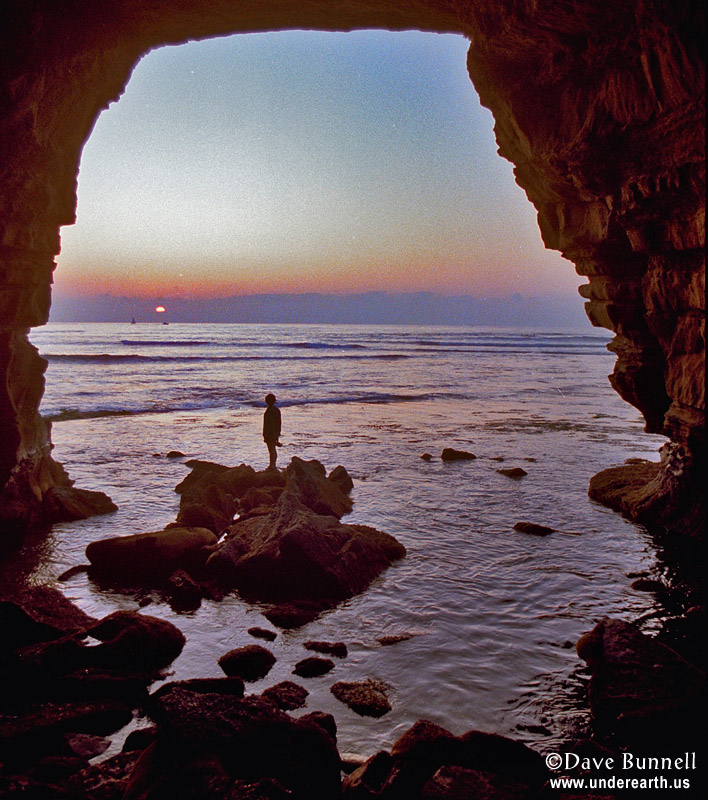
Sea caves are formed by the power of the ocean (or in some cases, lakes) attacking zones of weakness in coastal cliffs. The weak zone is usually a fault, or fractured zone formed during slippage. Another type of weak zone is formed where dissimilar types of rocks are interbedded and one is weaker than the other. Typically this is a dike, or intrusive vein of more easily eroded rock found within a stronger host rock. Yet a third instance is in sedimentary rocks where a layer of softer rock is interbedded between harder layers. The cave may begin as a very narrow crack into which waves can penetrate and exert tremendous force, cracking the rock from within by both the weight of the water and by compression of air. Sand and rock carried by waves produce additional erosive power on the cave's walls. Sea caves rarely have formations like solution caves or lava tubes, so we're just devoting one page to them here in The Virtual Cave. Occasionally some flowstone or small stalagmites are seen, formed much as in solution caves. Typically these occur in caves formed in sandstone, limestone, or sometimes even those in basalt. Sea caves are found all over the world, and may be one of the most numerous types of caves. Areas known for large concentrations of sea caves include the Pacific coast states of the USA (Alaska, Washington, Oregon, and California, and especially, California's Channel Islands); the Na Pali coast of Kauai; the Greek Isles; the British Isles, and many other places with cliffs of good solid rock to host the caves. Of special interest is New Zealand, which has both the world's two largest sea caves, in terms of their length, and also the world's largest in terms of volume. See below for details on these amazing caves. Author Dave Bunnell, has explored and surveyed over 500 sea caves around the world, and written numerous articles, two books on California sea caves, and an encyclopedia chapter on them. See the References section at the end of this page for links to articles in PDF format that the I've written on sea caves in California, Hawaii, and New Zealand and on special topics such as vertical sea caves.I also built and attempt to maintain as current, the Wikipedia page on sea caves |
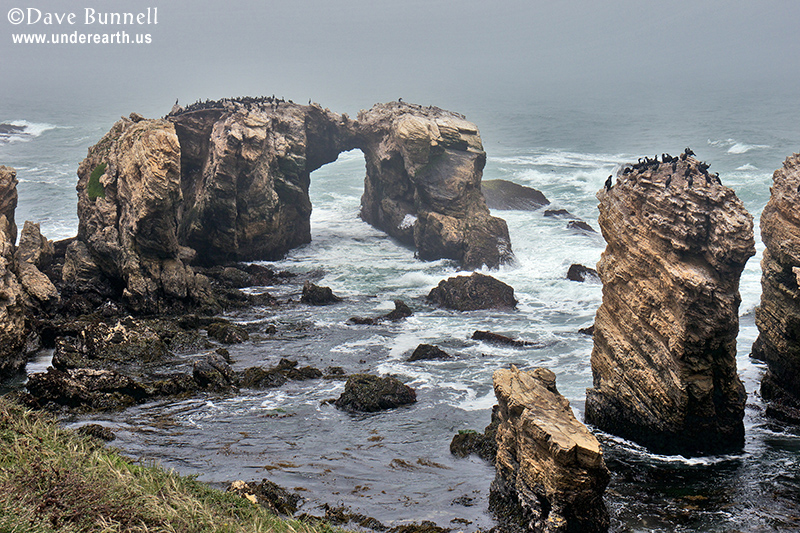
Arches & sea stacks Regions where sea caves form are often associated with arches and sea stacks. Often these are remnants from collapses of sea caves, and in some cases may line up along what had been a fault line in a rock unit that has been carved by the sea into isolated stacks of rock. Both arches and stacks are relatively ephemeral and numerous arches depicted on postcards from the early 1900s have already collpased. A database of sea arches is maintained by the National Arch and Bridge Society . |
|
|
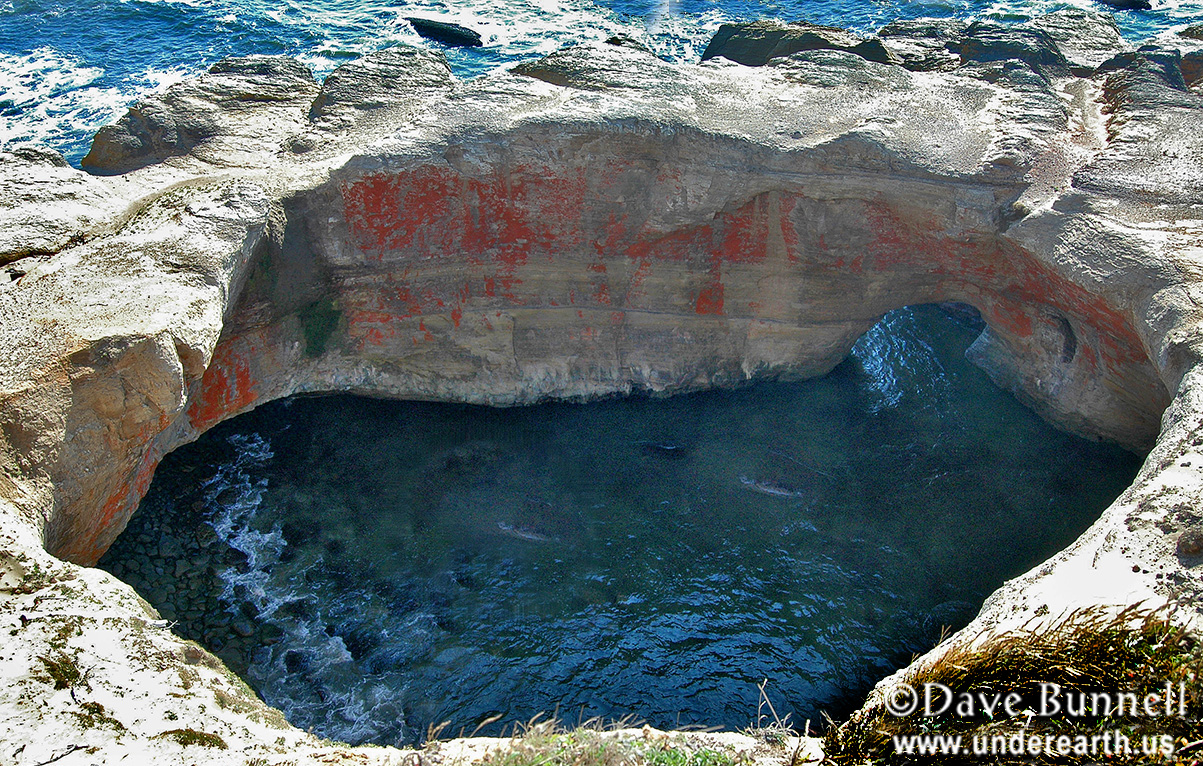
Punchbowls Sea caves may form some very large chambers, especially where multiple passages converge and the rock is attacked from multiple points. In time, the ceiling of this chamber may collapse and form a large littoral sinkhole. Often these are oval shaped, giving rise to the punchbowl name. At high tides, punchbowls may appear as churning cauldrons of confused seas. Examples occur worldwide but a well known example is the Devil's Punchbowl on the Oregon coast shown at left.
|
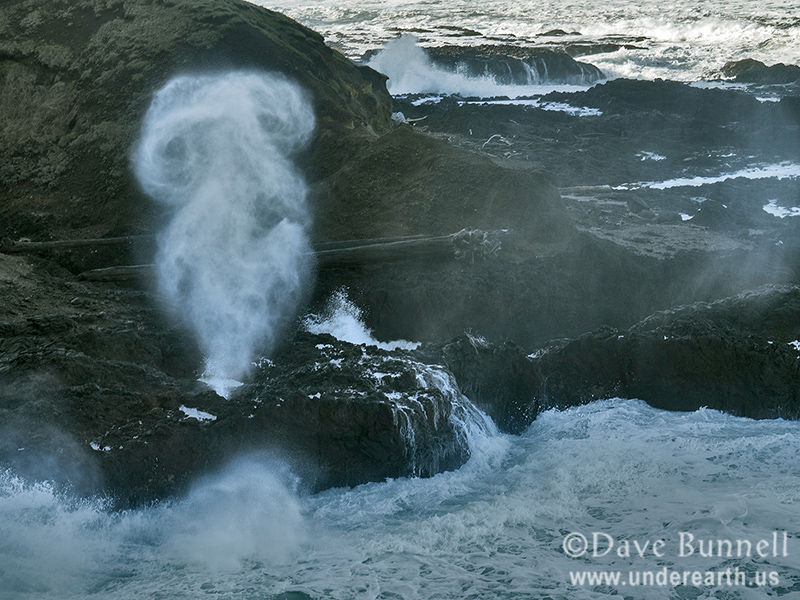 |
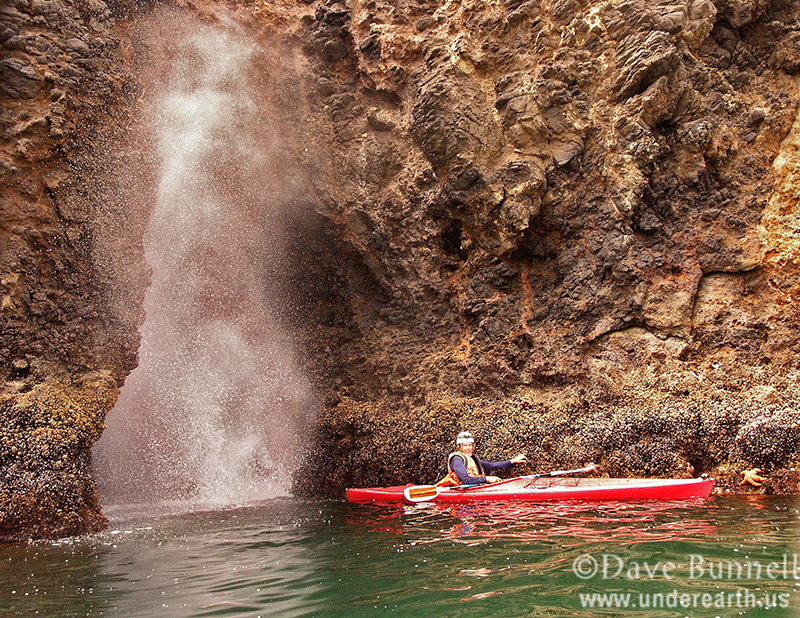
Blowholes A relatively uncommon phenomenon associated with sea caves is the blowhole. These tend to be very dependent on tide level and are basically of two types. On the left is a classic blowhole, the Spouting Horn on the Oregon coast. Here waves enter a sea cave and seal off the main entrance, compressing air inside that shoots water violently out a crack in a ceiling. On the right is the blowback sort of blowhole, where a single entrance becomes submerged by a swell, with compressed air shooting out water as the entrance is exposed by the receding swell. |
 |
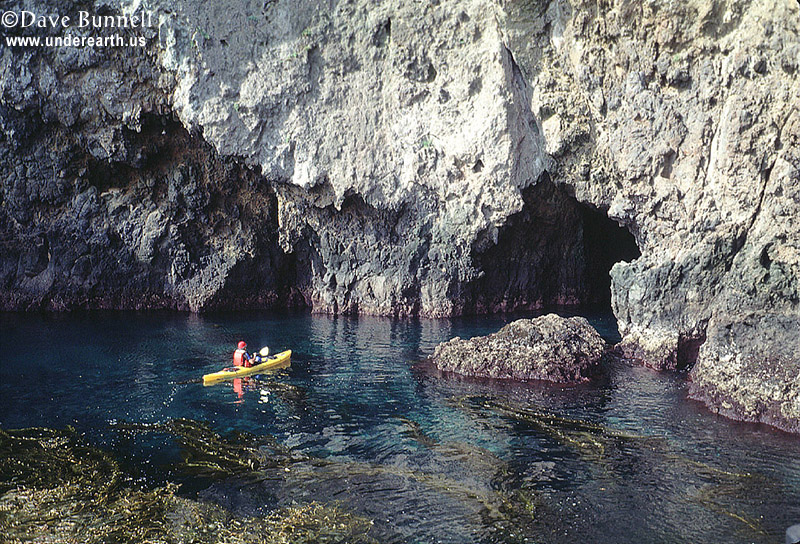 |
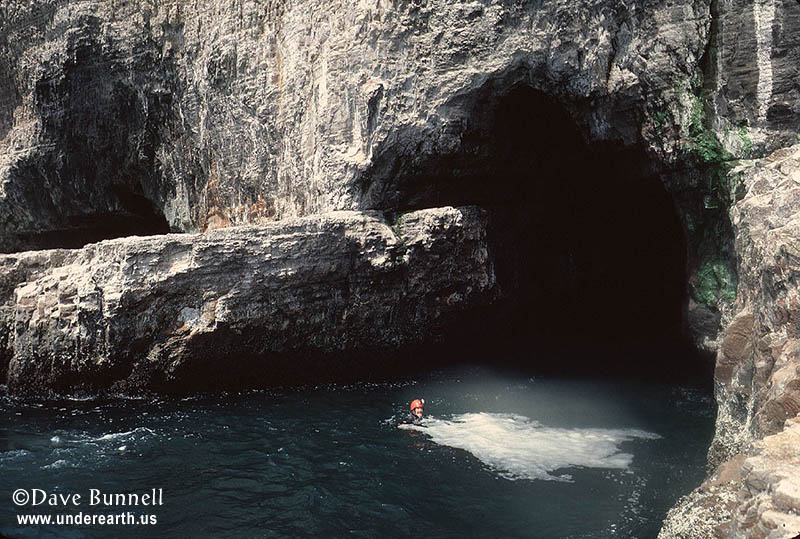
The Entrance Zone Sea caves may be explored in several ways: with kayaks or other small boats; by swimming in; or in some caves, by wading or walking if the cave empties out at low tide. When entering a cave where the surf is active, it's best to wear a helmet and study conditions carefully before entering. Remember that the power of waves and swell will be amplified in the cave interior! |
 |
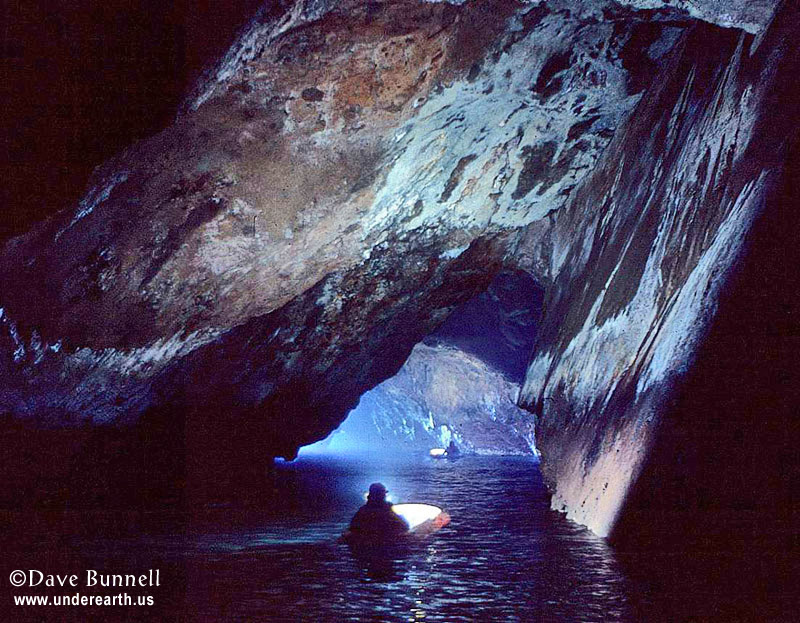 |
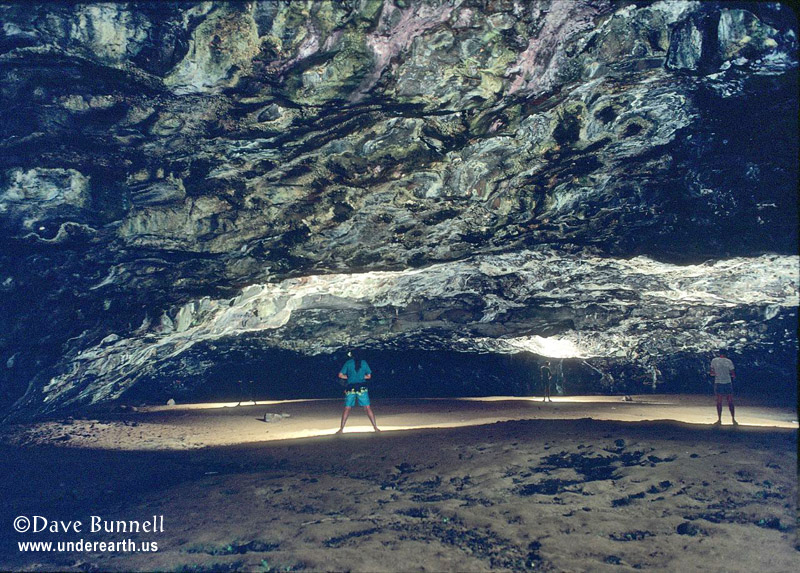
Inside a Sea Cave Inside, a sea cave may be dry or wet, depending on the tide, time of year, or the locale. On the left is a long cave formed along a fault, visible along the sloping wall on the right. The white material on the walls is calcite, deposited by water percolating through the rock. On the right is a sea cave floored with just sand, having emptied out temporarily at low tide. Colorful marine algaes adorn the ceiling.
|
 |
|
|
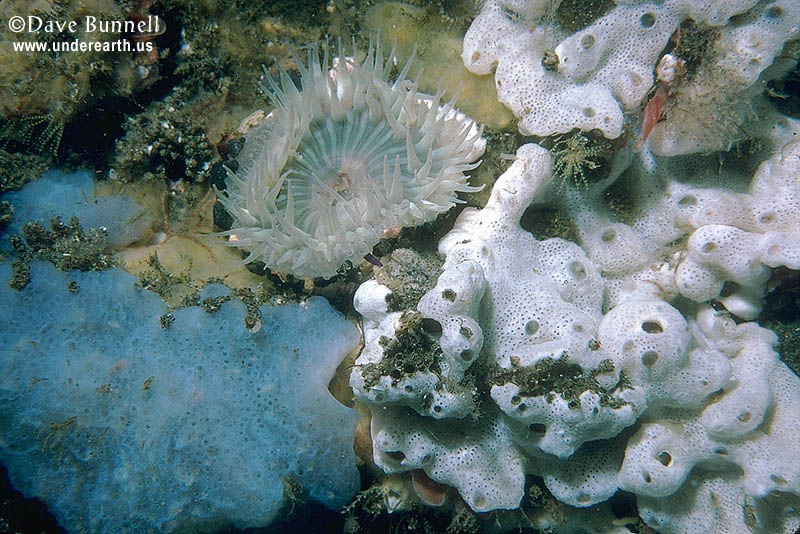
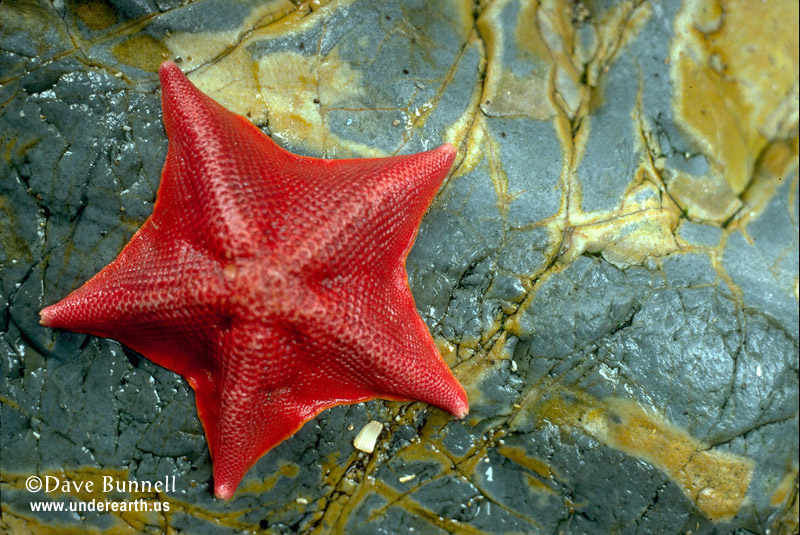
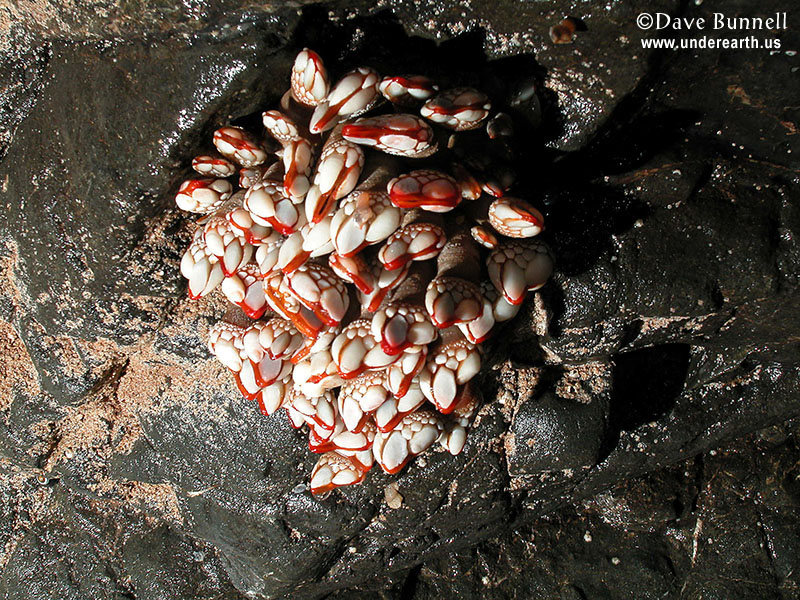
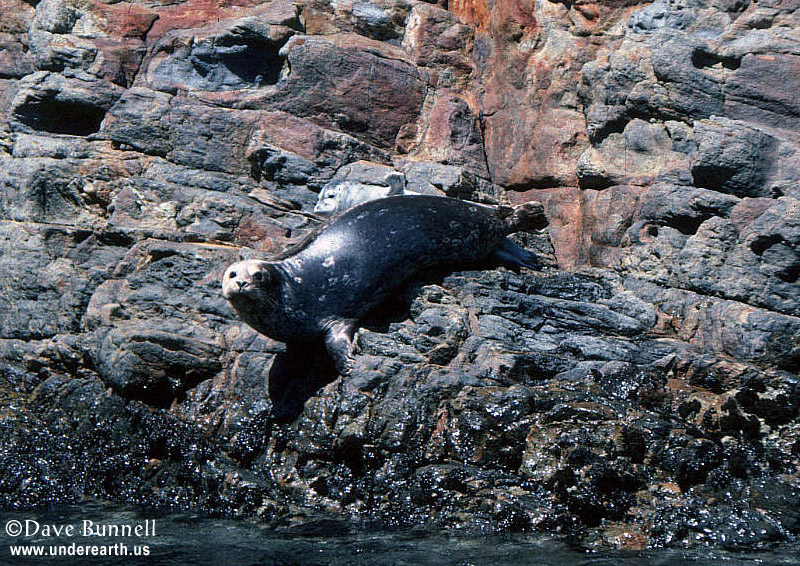
Life in a Sea Cave Sea caves may abound with life, both on their walls and floors.
Besides the kind of critters seen in normal tidepools, such as anemones,
starfish, and sponges, sea caves with dark zones may harbor organisms
not commonly seen in shallow water. . In California, the Giant Anemone
is normally green because of an algae that lives inside of it; but in
sea caves with dark zones, like the one middle left, these anemones may
be white because the green algae doesn't get enough sunlight to grow.
Similarly, sponges like that in the same image are generally always white in the darker recesses of sea caves, as opposed to the colorful ones in the upper left. |
|


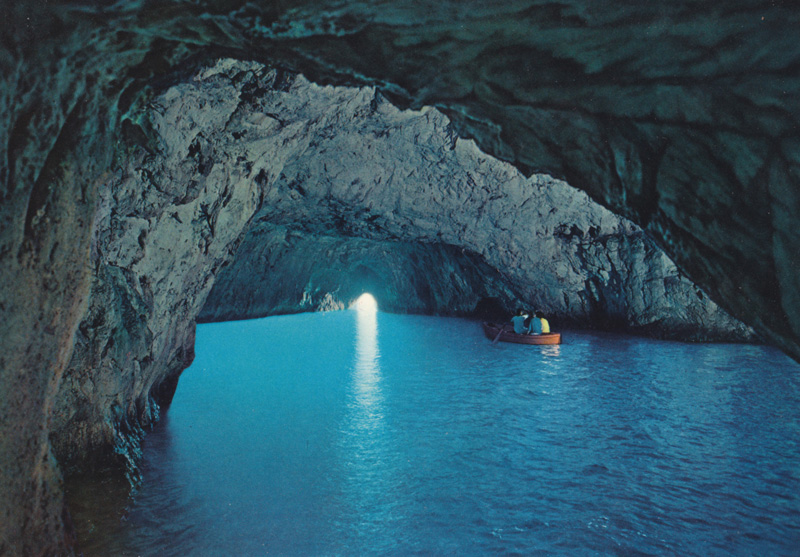 |
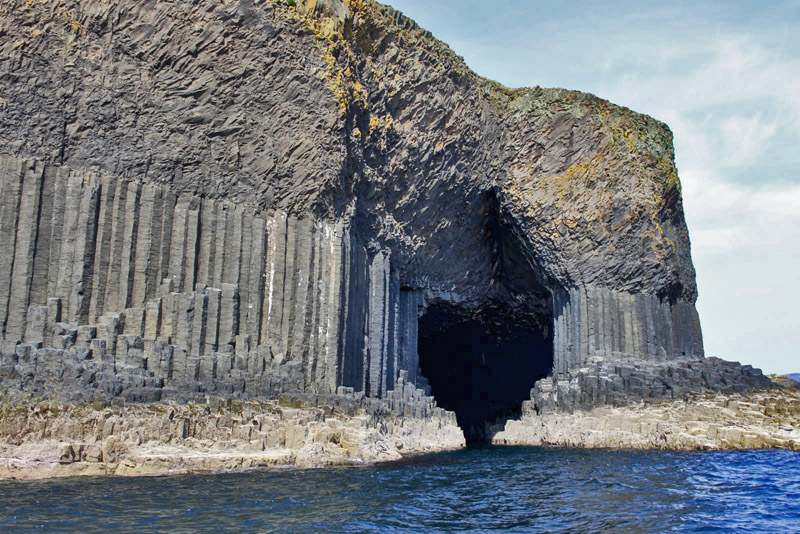
Famous Sea Caves Probably the world's two most famous sea caves are the Blue Grotto on the Italian island of Capri (left), and Fingal's Cave on the British island of Staffa (formed in columnar basalt). While spacious inside, they are only moderate in length, neither of them exceeding 250 feet from entrance to end. |
 |
World's Largest A list of the world's longest sea caves has been compiled by the author and Bob Gulden. Matainaka Cave, on the Otago coast of New Zealand' South Island, has been verified by surveys as of October 2012 as the world's largest sea cave by length, an amazing 1.54 km or 5,051 feet, not quite a mile. But if the rate of its formation outpaces that of its collapse, it could yet reach that milestone in centuries to come. Many fractures in the host sandstone have resulted in a cave with numerous interesecting passages and a dozen entrances in the sea cliff. Although the largest by length, it is probably not the largest by volume, although a volumetric survey wasn't produced. See below entry about Riko Riko Cave. |
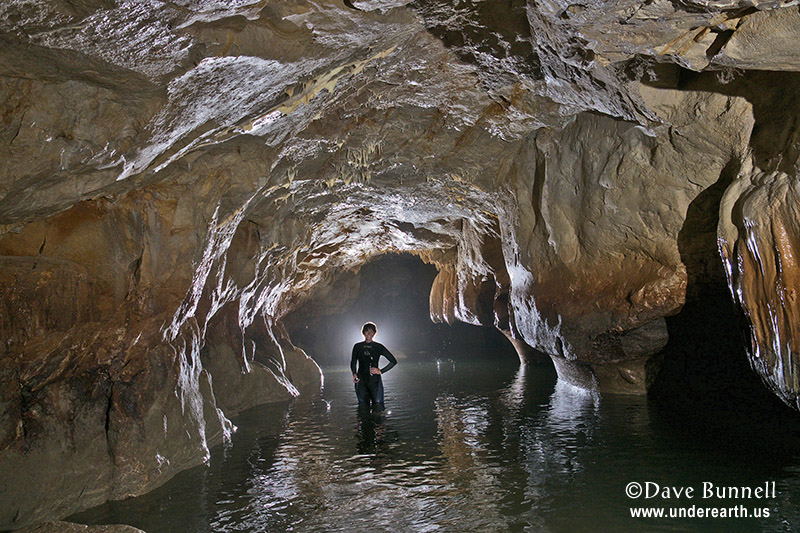 A passage in Matainaka shows its character, water-floored, smooth, sculpted walls and some calcite speleothems formed from the dissolution and re-deposition of the cement that binds the host sandstone together. |
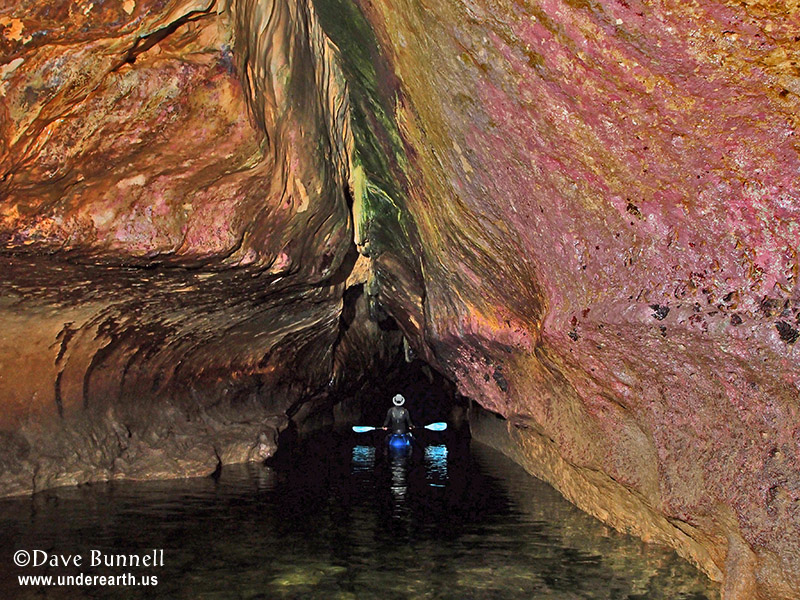
World's Largest Purple Cathedral is another large cave system on the Otago Coast of New Zealand recently surveyed to a length of 404m or 1325 feet. Unlike its neighbor Matainaka, it consists primarily of one long passage with a single entrance. The purple on the walls is a red algae exposed at low tide. |
 |
World's Largest Sea Lion Caves, a show cave operation in Florence, Oregon claims to be "America's largest sea cave." As of Nov 2018 this claim is true, as its length has been verified by a laser survey, which yielded a total distance of 1315 feet of traversible passage in the cave. Over half of this distance is in a tunnel not entered on the tours, but visible from the viewing platform. Incidentally, there is one other sea cave open to public tours, in La Jolla, California, know as Sunny Jims. It is much smaller in size. |
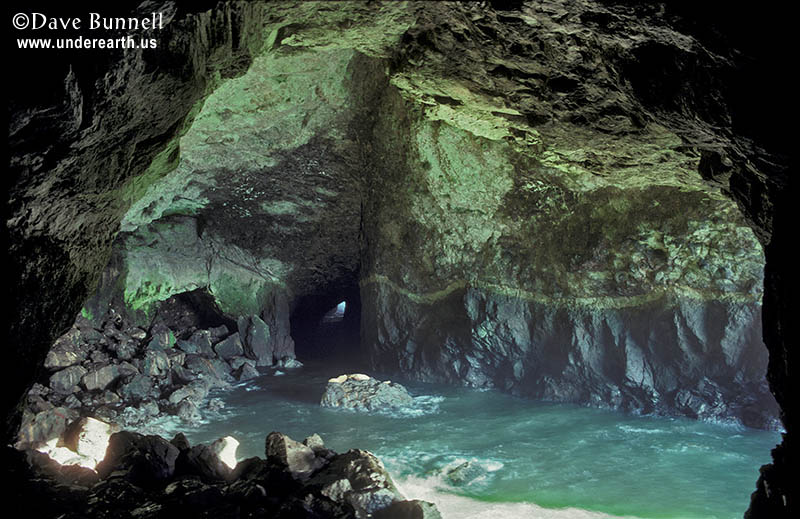 The inner chamber of Sea Lion Caves, taken by the author from the public viewing platform. In the center distance can be seen the light from the end of the south passage, over 700 feet distant, and not part of the tour route. |
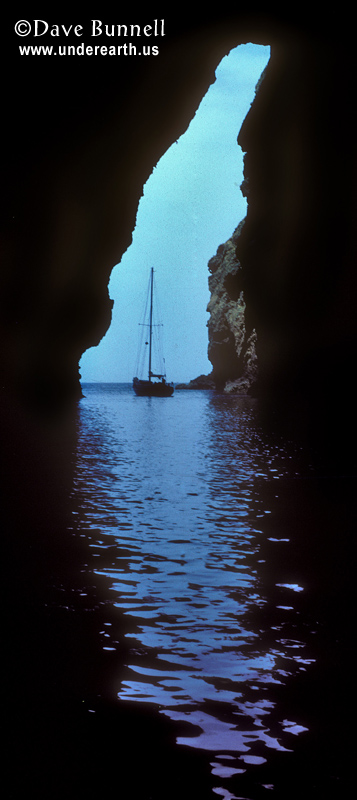 |
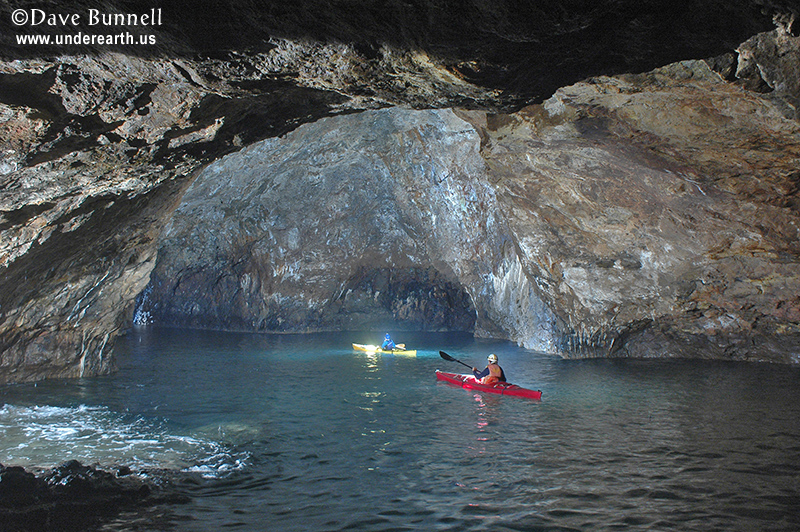
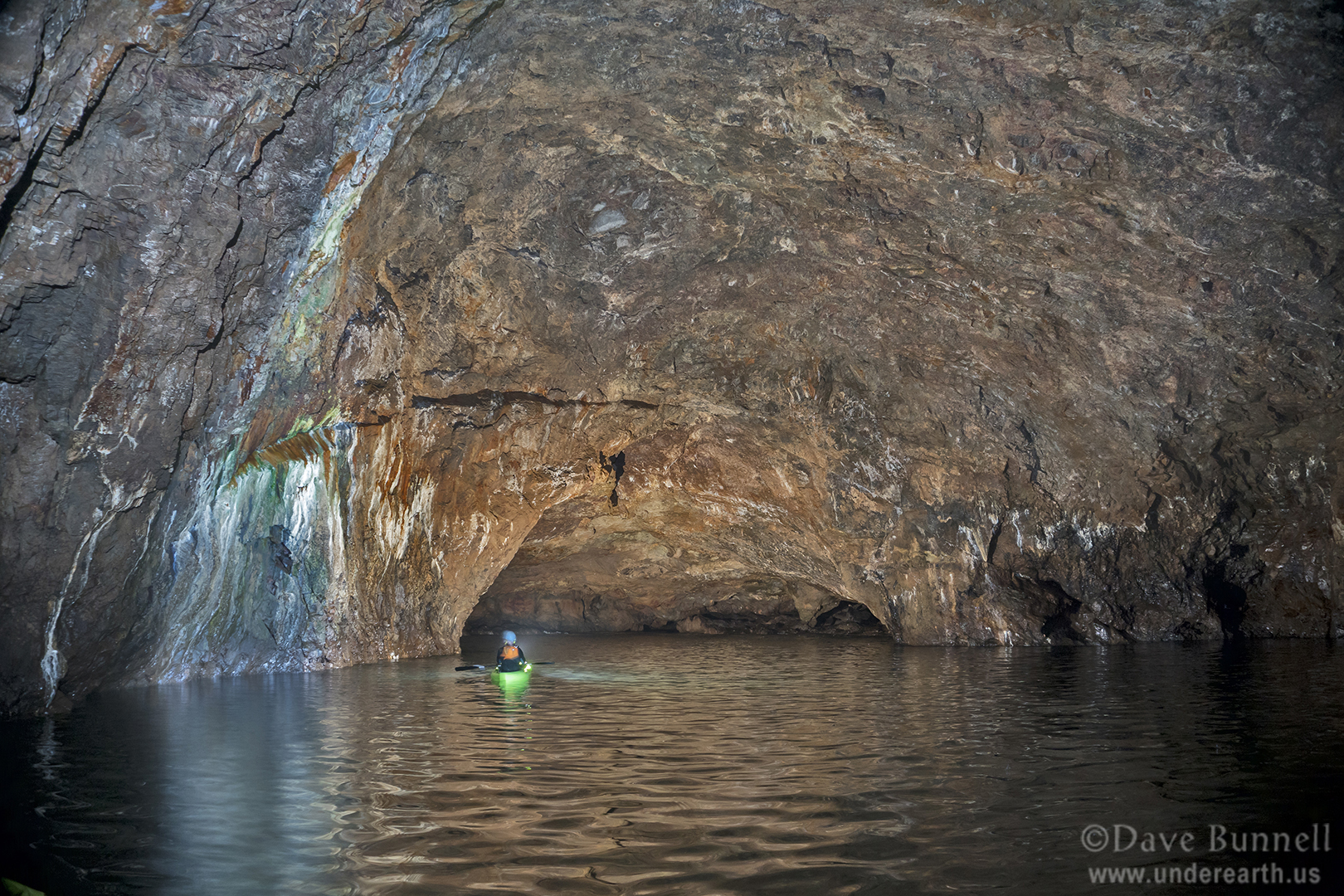
World's Largest Painted Cave is on California's Santa Cruz Island. It is 1227 feet long and large enough to take a 40-foot boat inside. On the left, looking out the 130-foot-high entrance. On the right are two views of the very dark inner chamber. The top image shows a sharp edge to the right of the red kayak, where the two faults along which the chamber eroded intersect. Sea lions inhabit the ledges in the back of the chamber much of the year. Click here to see a detailed map of the cave. |
Two views of the inner chamber of Painted Cave, usually explored by dinghy or kayak from a larger boat. |
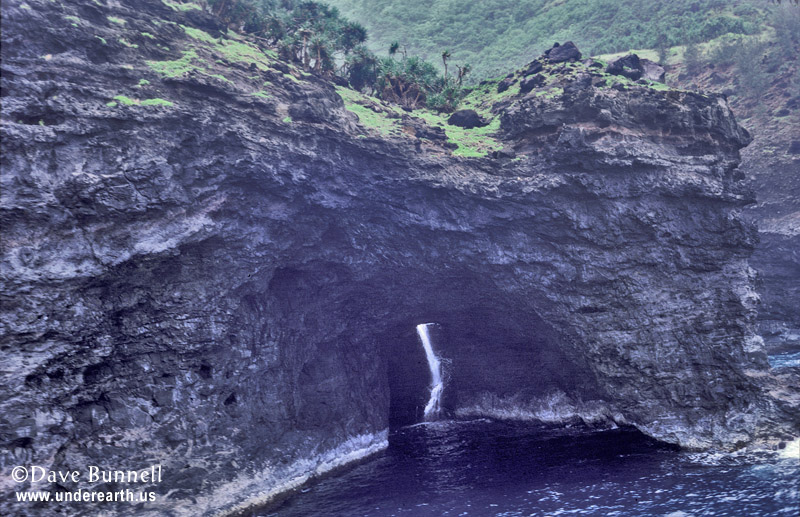
World's Largest Another huge sea cave on the long sea cave list is Waiahuakua on Kauai's Na Pali coast, which tapes out at 1155 feet long. Also known as the Sacred Water Cave, it can be accessed by kayaks or by boat. It has two etnrances and one can kayak between them when the sea conditions permit. There is also a skylight entrance through which a waterfall enters the cave, as seen in the shot at right taken by the author from a helicopter. The second article in the list below includes a map and more information about the cave. |
 |
Other contenders for world's largest sea caves
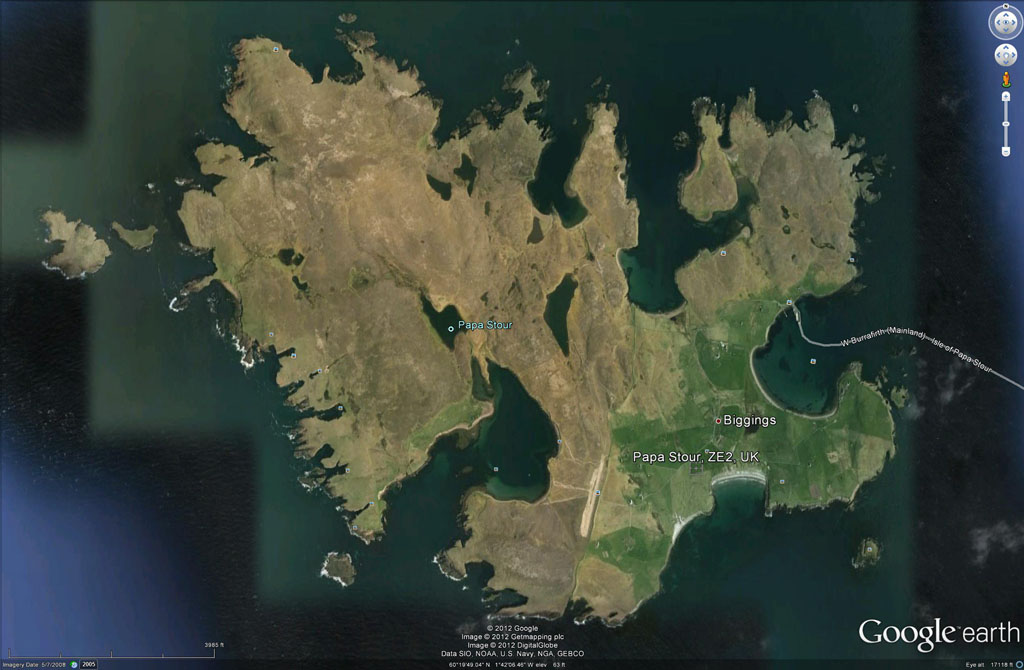
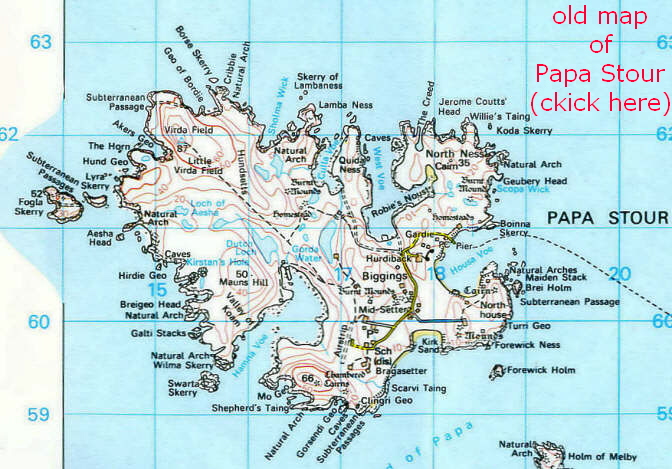
SCOTLANDHoll o Boardie is a cave on Papa Stour, one of the Shetland Islands, off the northern tip of Scotland. It hasn't been officially surveyed, but can be estimated fairly accurately since it is a tunnel passing through a headland. A local expert puts it at about 330m (1082 feet) long. This makes it somewhat longer in linear extent than any but Purple Cathedral, so by that yardstick is one of the world's longest. It is not surprising that the longest sea cave passage should be a two-entrance cave, as this has allowed the sea to attack it at both ends. Eventually, the tunnel's roof will collapse and leave a sea stack. |
|
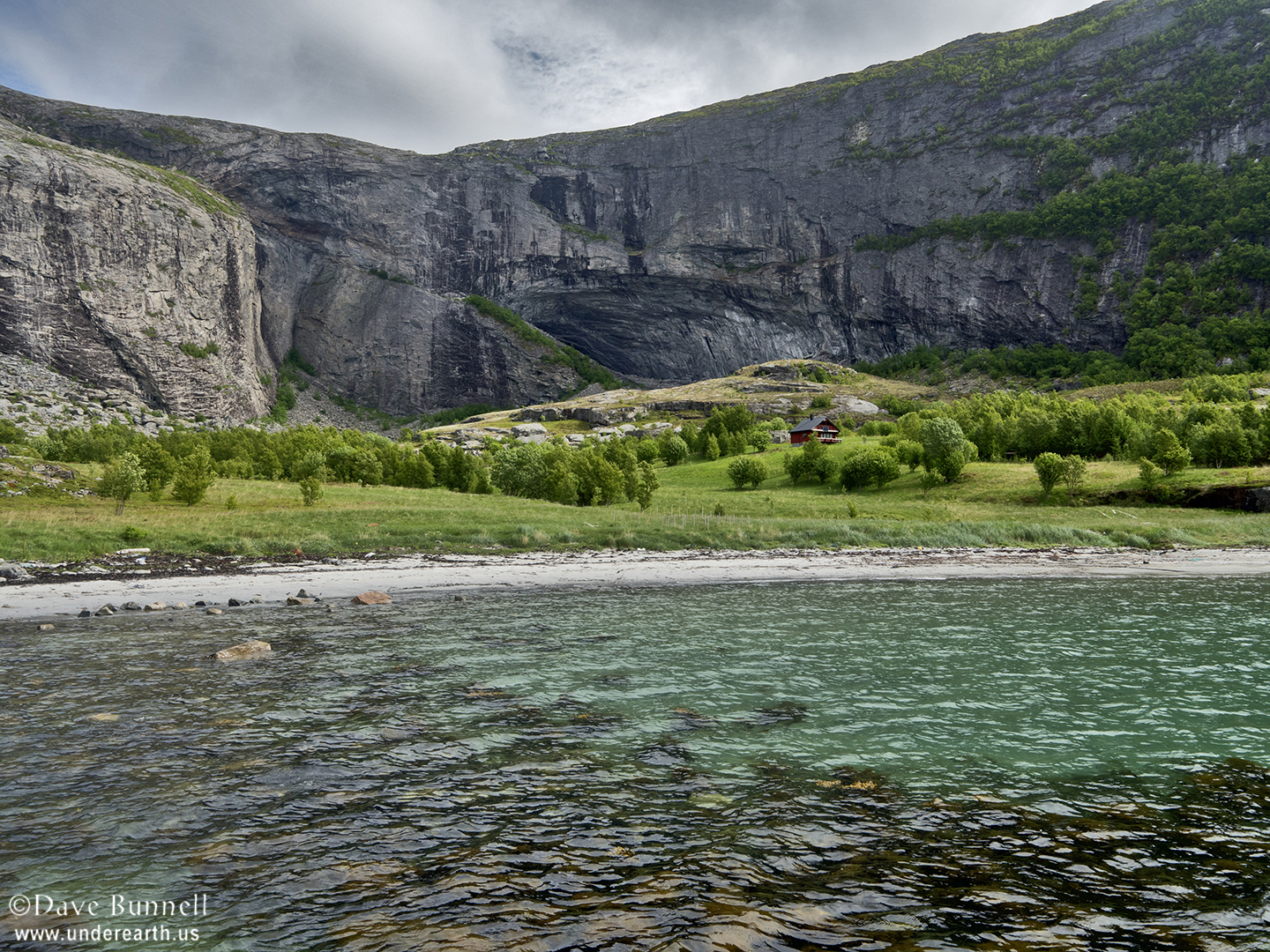
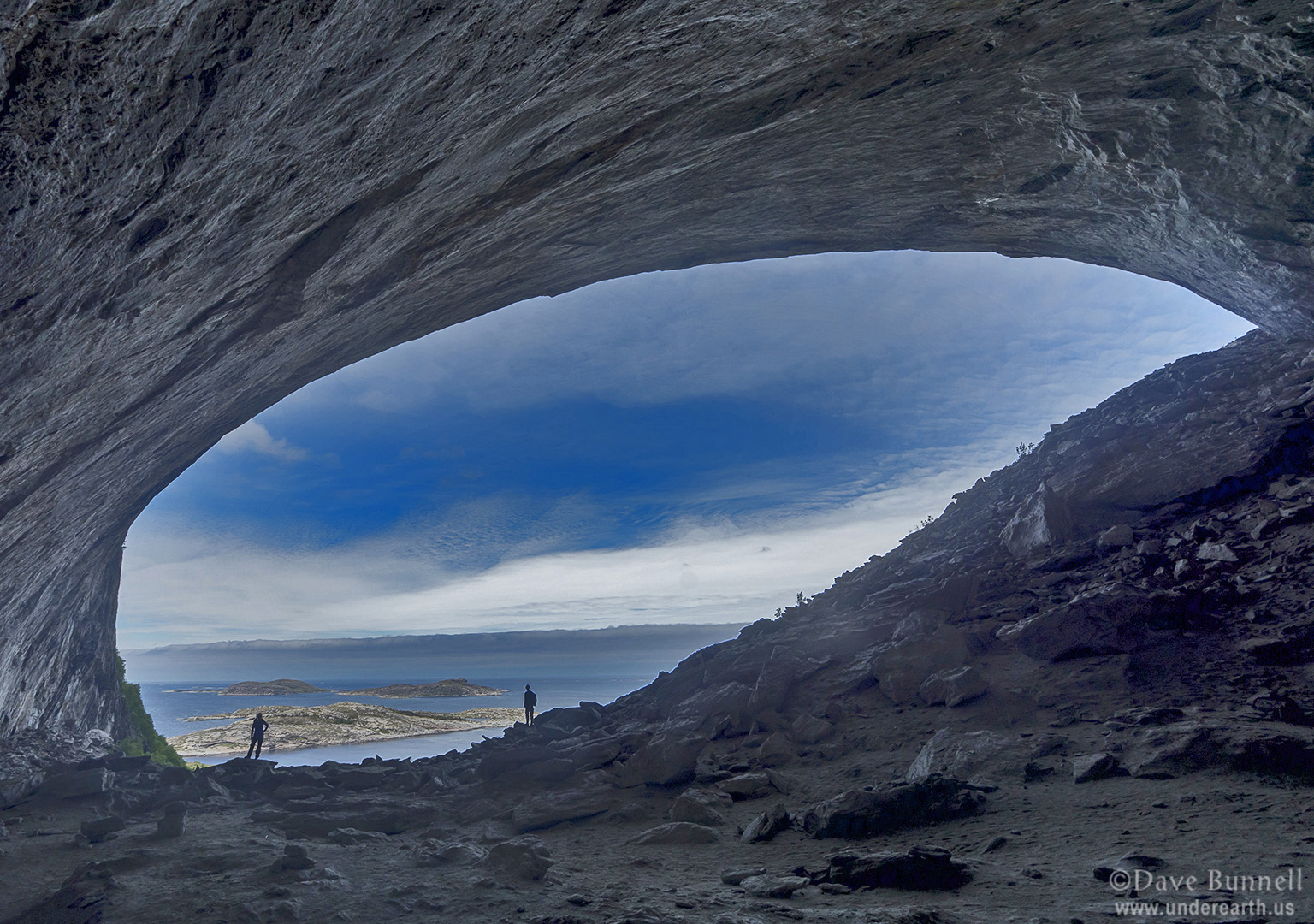
Norway's Relict Sea CavesSome of the world's largest sea caves are relict or raised sea caves on the coast of Norway. These are caves formed by wave action during the ice ages that have been uplifted above the littoral zone by isostatic rebound once the glaciers had melted. They now range from 100 to 384 feet above the present sea level, so none are currently enlarging by wave action. They formed over a very long period of time, perhaps more than a million years in some cases according to dating of sediments within. No doubt this is why they are so much bigger than caves at current ocean level. The largest are formed in granitic rocks. Swedish caver Rabbe Sjoberg provided this list of the 10 longest based on accurate surveys: Halvikshulen, Osen 340 m (1,115 feet) In the photos on the right are two of these long caves. Note the people for scale in the middle photo. That entrance is 722 feet wide and probably the largest sea cave entrance in the world.
|
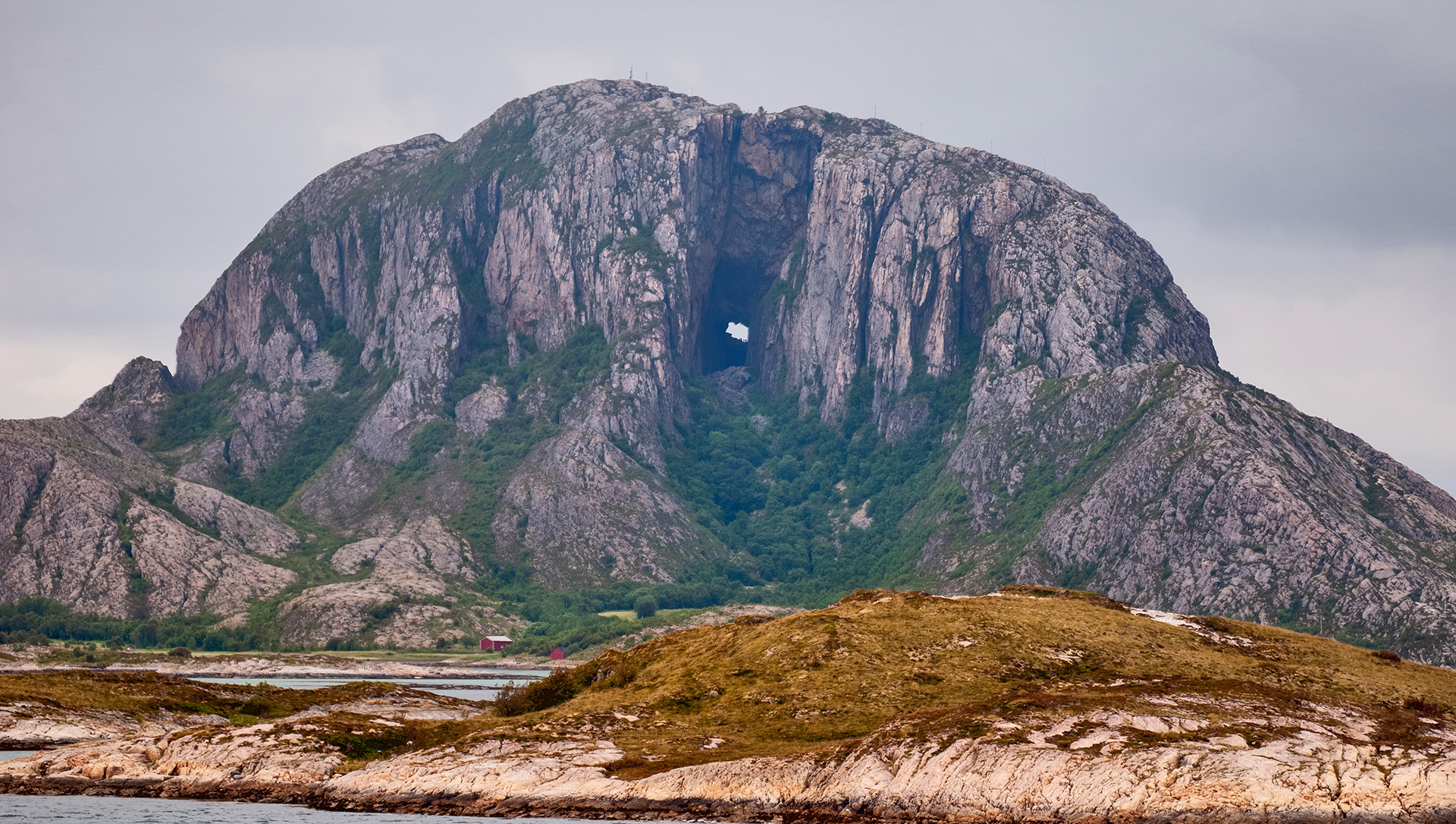
View of Torghatten, the mountain with a sea cave cutting through it for 160 m or 525 feet. |
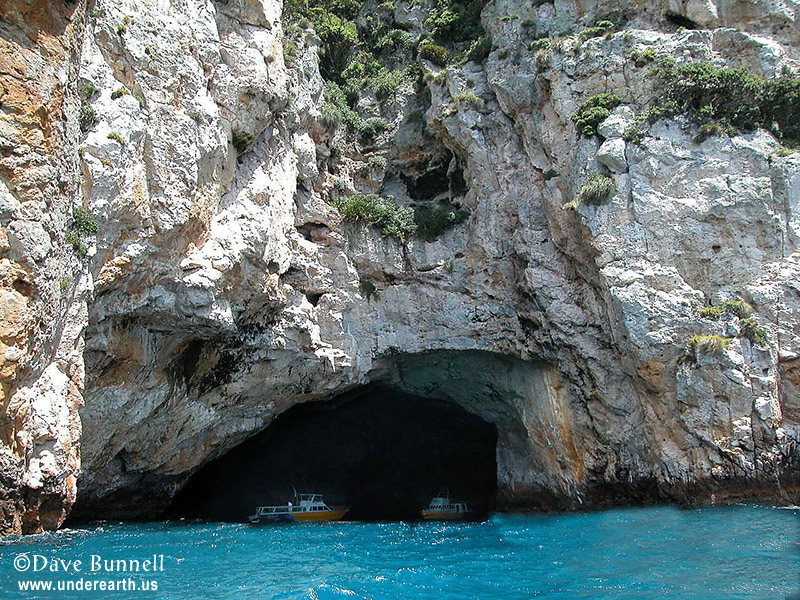
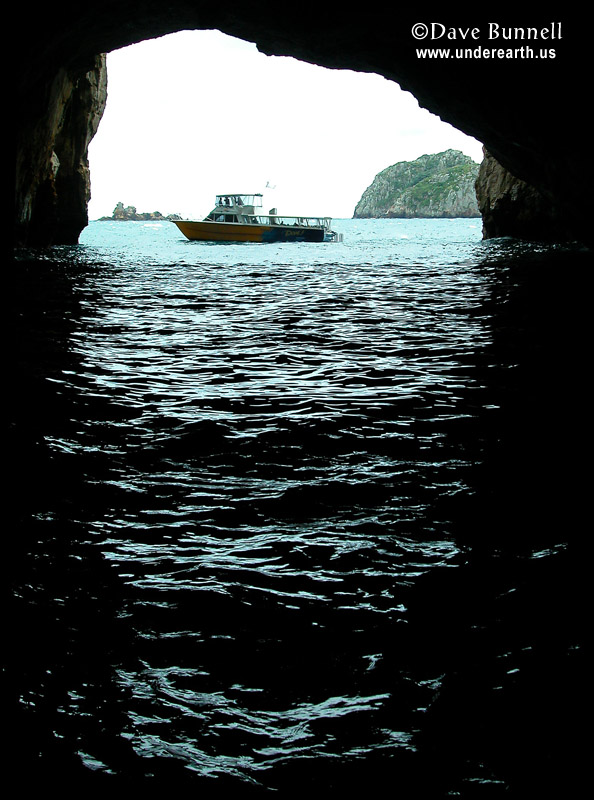 A 50-foot dive boat in the entrance of RikoRiko, viewed from inside and outside (upper right) |
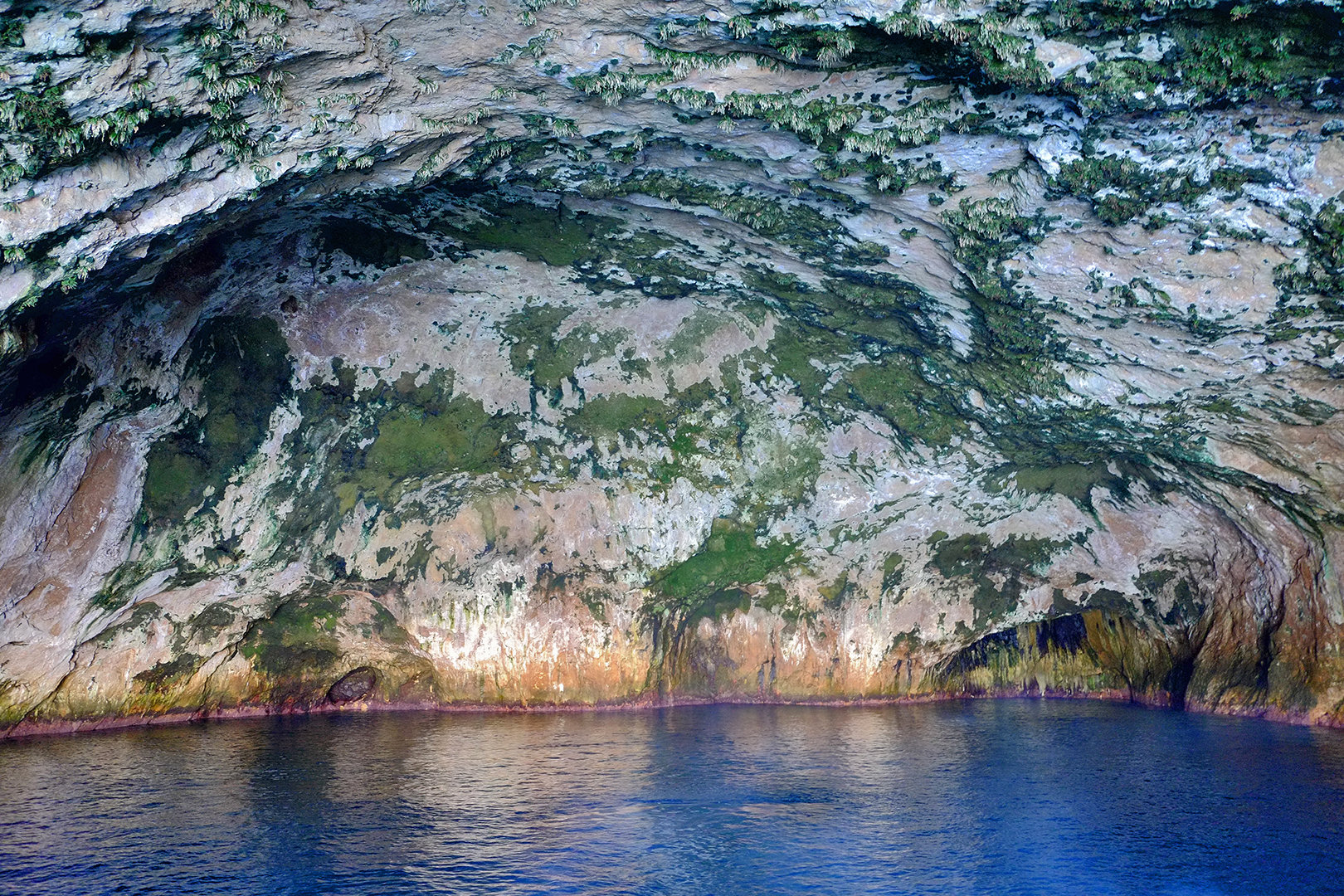
World's Largest When we ask what is the world's largest sea cave by volume rather than horizontal length, we get a different answer: Riko Riko Cave, on the Poor Knight Islands off the east coast of New Zealand's North Island. Lengthwise, Riko tapes out at only about 500 feet, but the egg-shaped chamber was determined via laser survey to have a volume of about 7,800,000 cubic feet. Painted Cave's volume can only be estimated from its survey, to be roughly 56% that of Riko. Dive! Tutakaka offers boat tours of the Poor Knights that include a visit to Riko Riko. Click here for a detailed article on the 3D laser survey of Riko Riko with more photos, in Adobe Acrobat format. |
|
| Back to: | |
 |
Last updated November 15, 2018 |